
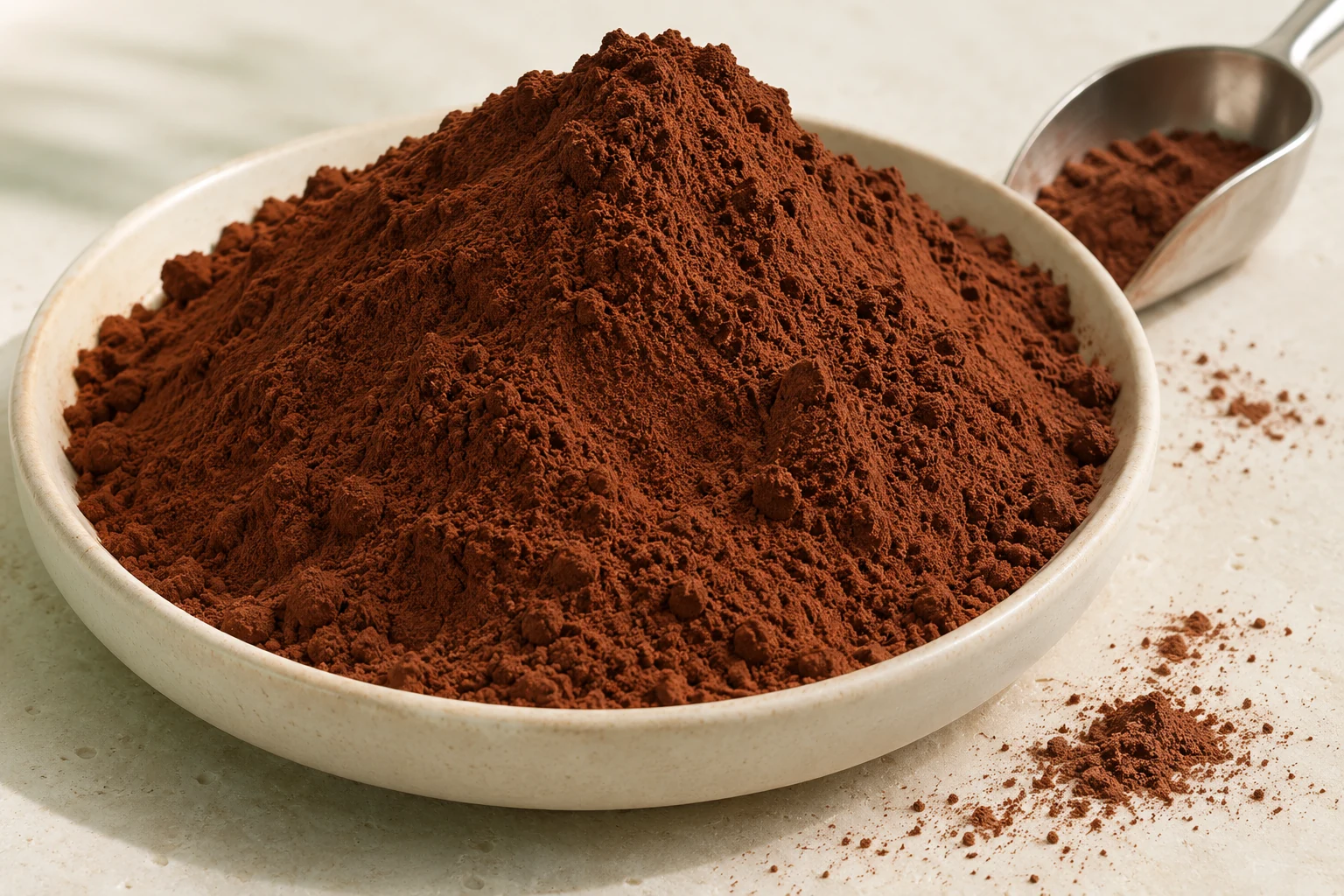
The category name alone does not determine the result
Two powders with the same name may serve different production needs. Start by defining the end product: biscuits, sponge cake, filling or another system. Then describe the expected colour, flavour and ingredient behaviour during processing.
Your current specification is a useful comparison baseline. When developing a new product, the technical brief can be built from formulation requirements and a sample of the finished product.
Natural and alkalised are different options
Alkalisation changes the properties of cocoa powder, including acidity and colour. Natural and alkalised powders should be compared in the context of your formulation. A darker colour alone does not prove that a product is better suited to the task.
Manufacturers separately state fat content, pH and processing type in the documents for specific brands. These parameters help narrow the selection, but do not replace testing in the end product.
What to include in the technical brief
- Natural or alkalised option.
- Required fat content.
- Colour and flavour in your product, as well as in the dry powder.
- Requirements for pH, particle size and moisture.
- Composition restrictions and documents required by your quality team.
- Pack size, procurement volume, consumption dates and delivery location.
How to decide on a replacement
Agree the criteria before the trial: which parameters must be maintained, which may change and how the result will be assessed. Test the sample under comparable conditions and record the dosage and finished-product yield.
Compare the full cost of use. The price per kilogram matters alongside ingredient consumption and the result in the finished product. GEO FOOD TRADE helps gather requirements, compare documents and prepare ingredient selection.
Primary sources on this topic
These links are technical sources. They do not indicate a partnership or the availability of these brands from GEO FOOD TRADE.